When faith becomes a weapon
Years ago, I worked as a motorcycle youth work in Dover, helping young people get road legal, running youth clubs and getting to know the roads. In Dover, you are always conscious of the sea: ferries, the port, France on a clear day, and those white cliffs that did their bit to keep Vera Lynn in work.
Today, Dover means something else too: small boats, asylum seekers and heated arguments about who belongs in Britain.
These raise serious questions about borders, resources and processing asylum claims. Christians will disagree about the answers. Matthew’s Gospel doesn’t set an annual asylum quota. But Scripture gives us a responsibility towards neighbours, strangers and vulnerable people, rooted in something we forget at our peril: we are all made in the image of God.
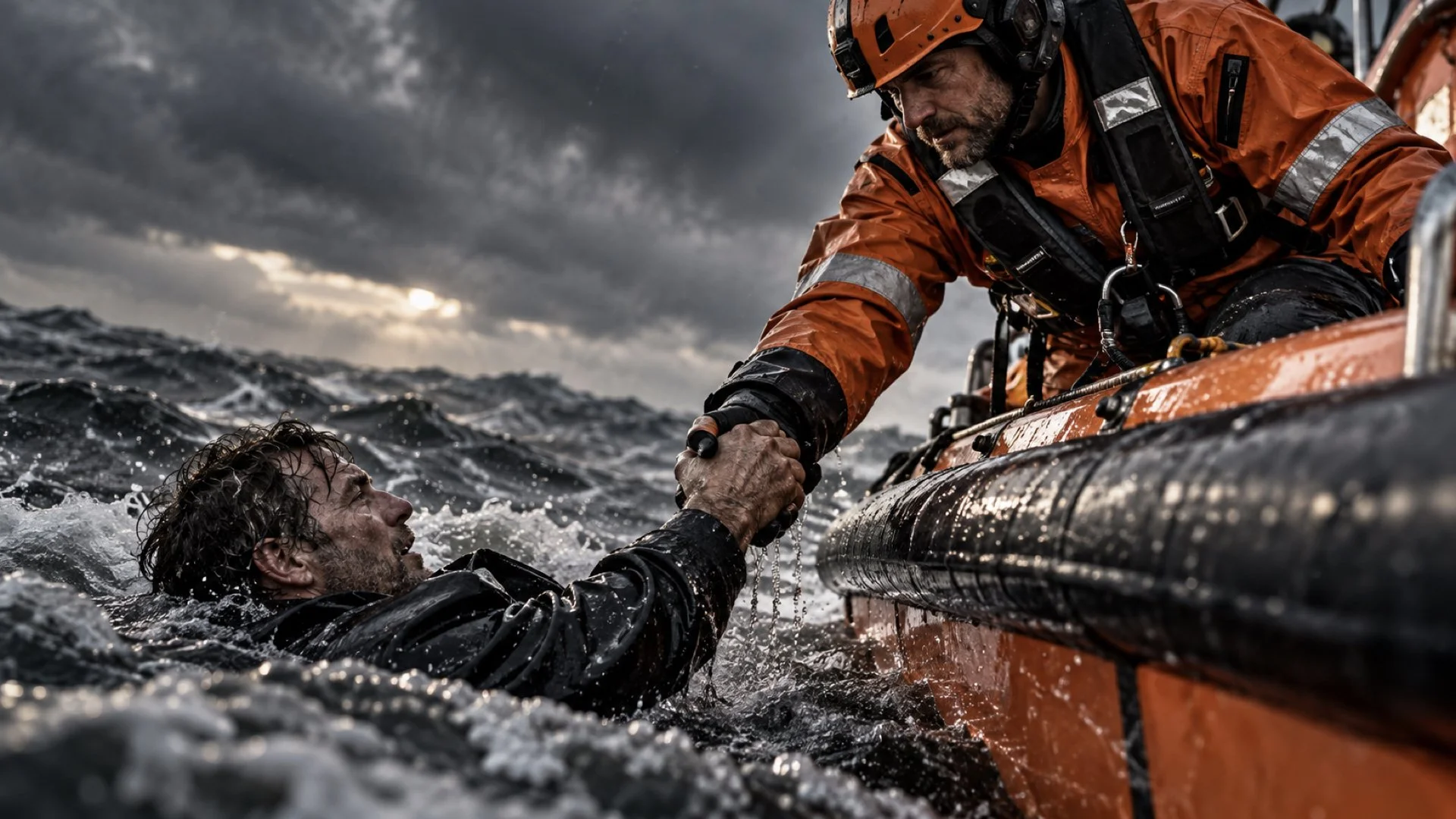
That brings me to the RNLI. Its purpose is saving lives at sea. When someone is drowning, you don’t first ask where they come from, what they believe or whether they should live in Britain. You rescue them, leaving other decisions to the appropriate authorities.
But first: get them out of the water.
That principle has become caught up in the immigration debate, extending along the coast from Dover to Portsmouth. In September, Portsmouth lifeboat station was temporarily taken off service following protests and abuse directed at volunteers, while the RNLI reviewed crew safety and wellbeing. People saving lives needed to consider their own safety. Imagine threatening an ambulance crew because you objected to whom they were treating.
Daniel Thomas, known as Danny Tommo, founded Patriot Platform, which has organised anti-immigration protests. Christian language and symbols have featured prominently in its campaigning, and Thomas identifies as a Christian. He also faces a criminal damage charge over allegedly slashing a dinghy while an emergency responder was aboard. He denies that charge; the court must decide it.
It is not my place to pronounce on the sincerity of his faith. My question is bigger: what happens when Christianity becomes weaponised, and Christ becomes a mascot for a nation, race or political movement?
This temptation reaches beyond the far right. The left can recruit Jesus too. We must all ask whether we are following him or expecting him to follow us. It is astonishing how often Jesus agrees with the person in the pulpit. I include myself.
The story of Jesus’ triumphant entry into Jerusalem, celebrated on Palm Sunday unsettles that convenient view of Jesus (Mark 1.1-11)
Jesus enters Jerusalem as king during Passover, Israel’s celebration of liberation from Egypt. Yet the city lives under Roman occupation. Remembering freedom while living under an empire gives the crowd’s celebration a dangerous political edge. Some may hope for a messiah who will drive Rome out.
We should understand that longing. The danger comes when national hopes become so entwined with faith that our enemies become God’s enemies, and our victory becomes God’s victory. Before long, almost anything can be justified in his name.
Jesus rides into those expectations on a donkey.
This is a royal sign, drawing on Zechariah’s prophecy of a king arriving humbly. In that prophecy, chariots and warhorses disappear, battle bows are broken, and the king proclaims peace to the nations. How Jesus arrives tells us something about how he intends to rule. (Zechariah 9.9-10)
He accepts the cheers but gives no call to arms. In Mark’s account, he looks around the Temple and returns to Bethany. The following day, he confronts wrongdoing there, overturning tables and provoking powerful opposition. His peace has backbone. He challenges injustice without becoming the conqueror some may want.
It is easy to cheer for Jesus when we think he hates the same people we do. It becomes harder when he tells us to love them.
The militarisation of faith begins before anyone picks up a weapon. It begins when we divide humanity into our people and our enemies, assuming God belongs to our side. Compassion becomes weakness; helping the wrong person becomes betrayal; the cross becomes a battle flag.
Yet the man whose cross we carry tells us to love our enemies and pray for those who persecute us. Would this Jesus encourage us to obstruct a rescue or call lifeboat volunteers traitors?
And can those of us appalled by intimidation challenge it without beginning to enjoy our own contempt?
Within days of entering Jerusalem, Jesus faces crucifixion. Confronted by hatred and abused power, he responds: “Father, forgive them.” That forgiveness gives us courage to face our own fear, prejudice and resentment, rather than dressing them up as religious conviction.
Our fears may contain genuine concerns. But fear can also make us cruel, especially when someone supplies a convenient person to blame.
God’s image remains in the migrant, the lifeboat volunteer, the frightened resident and the angry protester. Human dignity cannot be reserved for people we agree with. When we diminish another person’s humanity, we diminish our own: we harden ourselves, silence compassion and learn not to care. The wound reaches into our own soul. By God’s grace, it can heal.
We still need difficult decisions about immigration and public safety. We can face them with the backbone of Jesus’ peace: telling the truth, challenging wrongdoing and protecting life without demonising people.
If we carry his cross, the man who carried it first must shape what we do next.
Someone is cold, frightened and struggling in the water. We may disagree about what happens afterwards.
But first, get them out.
Whatever flag we wave or cross we wear, they are made in the image of God, just as we are.